Boeing and Avilution unveil Battery Mesh System prototype for future military power networks
Modular prototype integrates mixed power sources into a single, transportable system to simplify sustainment and extend mission endurance

Global Services
Modular prototype integrates mixed power sources into a single, transportable system to simplify sustainment and extend mission endurance
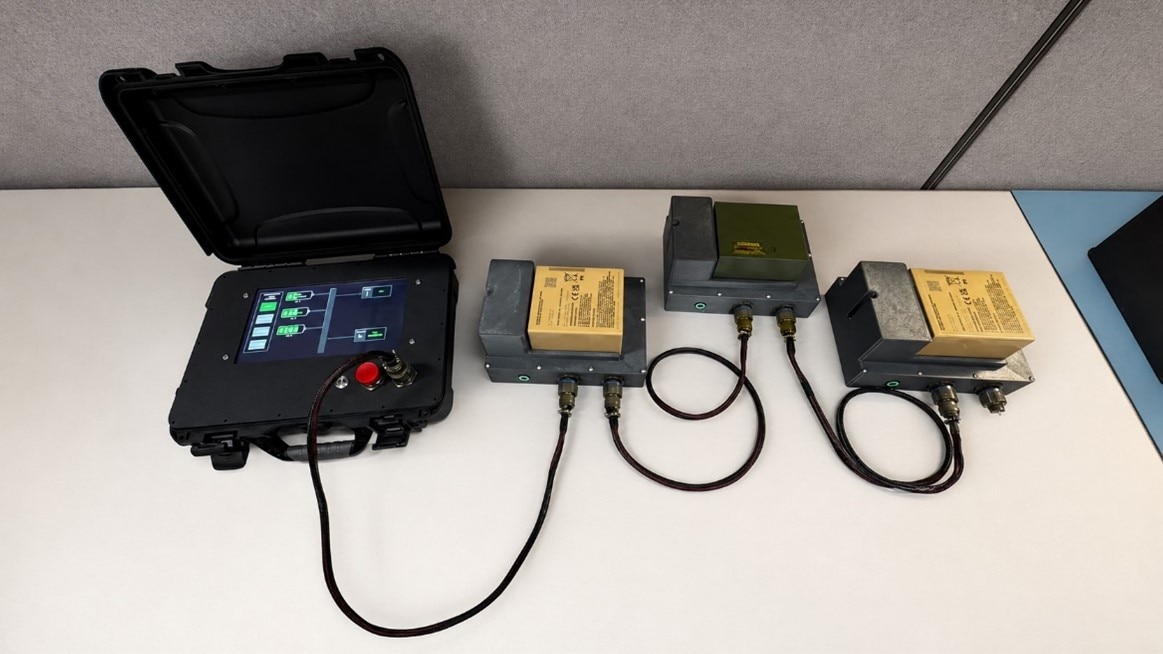
The Battery Mesh System is a practical replacement for the current fragmented mix of generators, batteries, and chargers — offering an affordable, upgradable, and resilient architecture that can evolve with changing threats and operational needs.
Boeing and Avilution will demonstrate a working prototype of a Battery Mesh System (BMS) at SOF Week that consolidates generators and mixed battery types into a single, mobile electrical distribution system to improve mission endurance and simplify sustainment for U.S. Army ground units.
On display at SOF Week
Software supremacy
Boeing is partnering with Avilution to integrate BMS using Avilution’s eXtensible Flight System (XFS). XFS is a modular, interoperable, and reconfigurable architecture proven in safety-critical flight systems. Its maturity and reliability reduce technical risk for BMS integration while delivering control and monitoring capabilities for operational use.
“This effort with Boeing demonstrates an expansion of Avilution's eXtensible Flight System from crewed flight into battery management systems. It shows how XFS technology can economically bring the safety and reliability of flight qualified systems to other industries, opening new opportunities for scalable, configurable control architectures,” said Mark Spencer, Avilution founder and XFS architect.
The prototype demonstrates a near-term path to lower generator fuel use and simplify logistics by consolidating incompatible batteries and chargers into a single, manageable system, while redundant distribution paths and flexible routing improve power resilience and mission endurance.
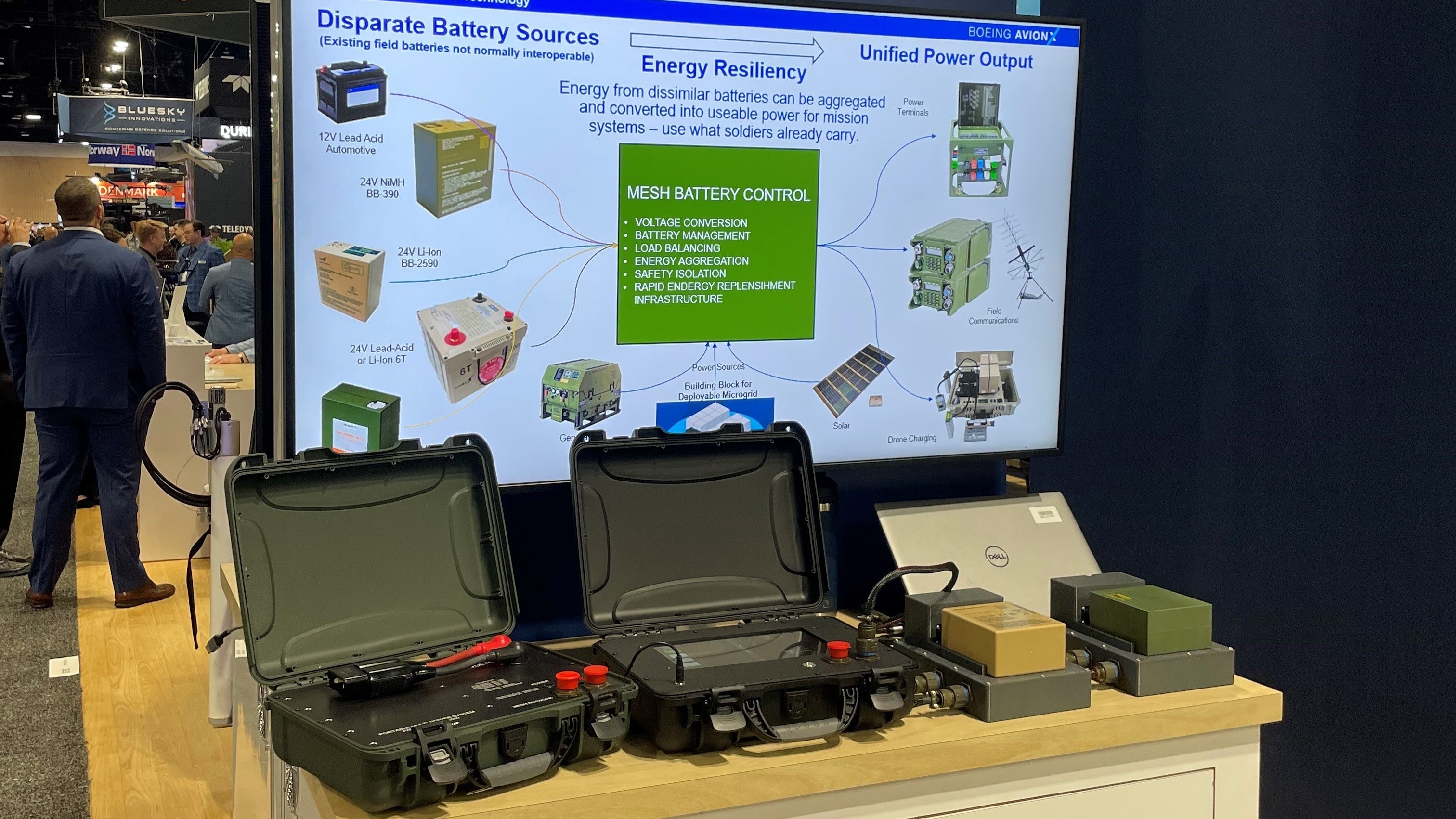
How it works
Operational benefits
The Battery Mesh System provides a practical alternative to the current fragmented mix of generators, batteries, and chargers — offering an affordable, upgradable, and resilient architecture that can evolve with changing threats and operational needs. The SOF Week prototype moves the concept into tangible hardware and helps pave a path for further testing and potential fielding.
“The system complements Boeing Global Services’ Agile Sustainment initiatives,” said John Chicoli, senior director, U.S. Army/Marine Corps & Special Ops/Missions & DLA Support Services, Boeing Global Services. “Modular hardware and software-enabled systems can transform sustainment and operational readiness — delivering faster turnarounds, fewer on-hand spares, and more time on station for warfighters.”