
Global Services
Global Services
In an industry where safety is paramount, how can airline operators ensure they are prepared for the unexpected? One way is by implementing a Competency-Based Training and Assessment (CBTA) program, an innovative approach that transcends traditional task-based training. Since 2019, Boeing has been developing, testing and implementing a CBTA pilot training program to equip pilots and airline personnel with the essential competencies for navigating the complexities of modern aviation.
Aviation risk mitigation has become increasingly critical, and while traditional task-based training provides foundational skills, it may not fully address the dynamic nature of flight safety risks. A CBTA program enhances pilot resilience and mitigates risks through a focus on competencies — a broader skill set that empowers pilots to manage unforeseen situations and operational challenges.
Traditional or task-based training programs focus on repetition of specific tasks, such as maneuvers and checklists, often in isolation. However, real-world situations are rarely aligned with the specific tasks chosen for training. Variables such as adverse weather, equipment malfunctions, and even human factors introduce complexity that task-based training cannot fully anticipate.
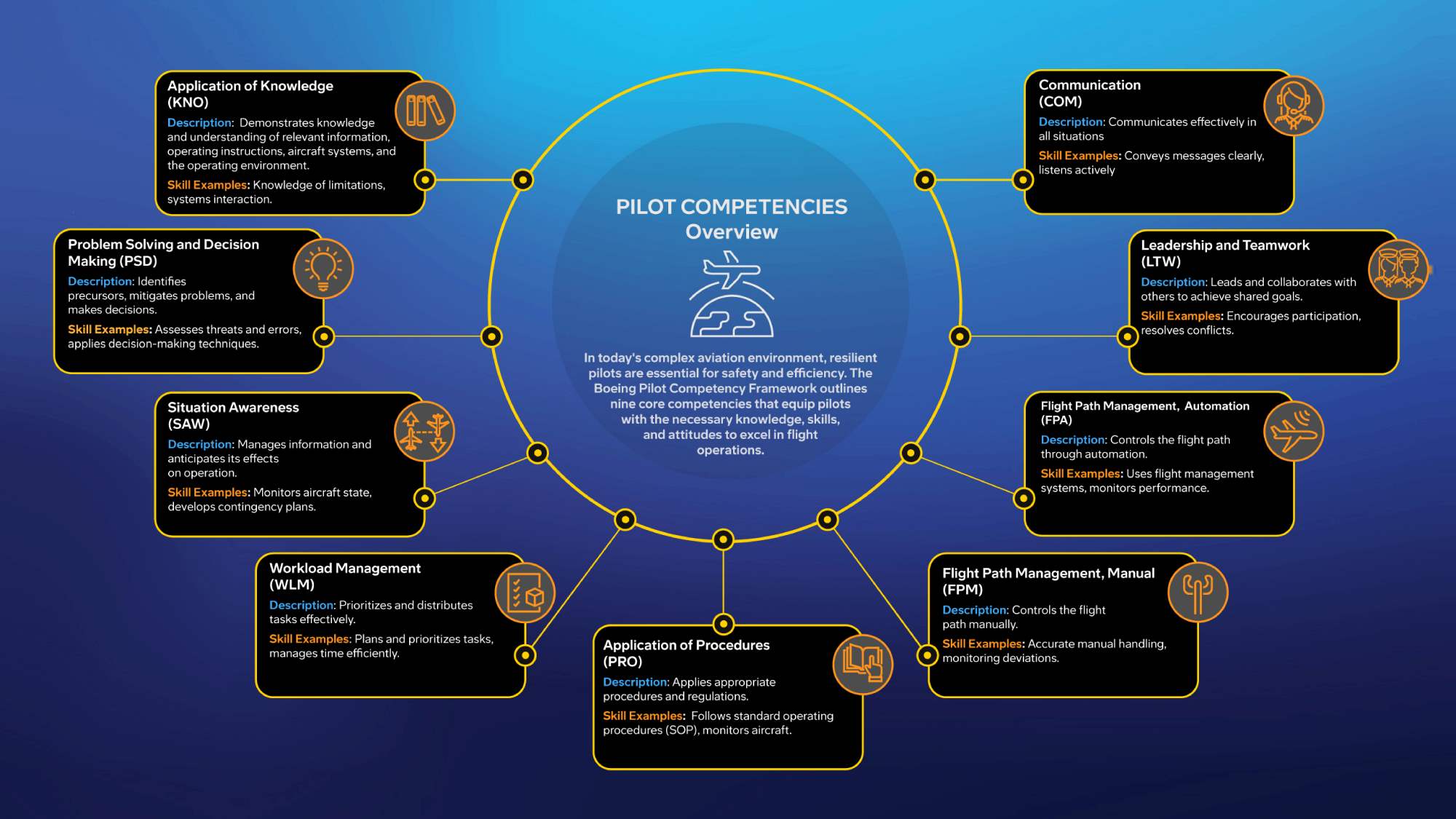
CBTA, in contrast, emphasizes the development of core competencies, or specific skills, knowledge or behaviors, such as problem-solving, decision-making, leadership, and communication. These competencies allow personnel to apply critical thinking in dynamic situations, effectively managing risks as they arise, a capability known as Threat and Error Management (TEM). When pilots are trained to handle a diverse set of scenarios, they can adapt quickly, minimizing the impact of unexpected challenges.
With CBTA, it’s not just about knowing the procedures well; it’s also about having the competency to recognize when to apply those procedures, working effectively as a team, and possessing the creativity to solve novel problems.
Airlines face a variety of operational risks, but many of these can be mitigated through a competency-based framework. A fundamental aspect of CBTA is identifying which competencies align with the risks airlines encounter most frequently. By training pilots in nine competencies, airlines can proactively reduce the likelihood of incidents and improve safety outcomes. Each competency is tied to risk areas that, when addressed through targeted training, can lead to a significant reduction in operational hazards.
CBTA is not just a training philosophy; it’s a comprehensive risk mitigation strategy. By aligning training programs with the competencies necessary to navigate real-world challenges, airlines can ensure that their personnel are not only compliant with regulations but truly prepared for the dynamic landscape of modern aviation. With increasing encouragement from regulators to adopt CBTA, the Boeing CBTA model is setting the standard for a safer, more adaptable future in aviation.
In addition to its application in airline flight training, CBTA is relevant across all stages of a pilot's career, from initial training to recurrent assessments, where foundational competencies are established and further developed. As pilots progress through their careers, they remain adept at handling unique and complex challenges.
Moreover, CBTA's principles extend seamlessly into maintenance training, where competencies such as problem-solving, decision-making, and communication are equally critical. By fostering a culture of competency across various roles within the aviation industry, CBTA not only enhances the skills of pilots but also equips maintenance personnel to effectively manage the complexities of modern aircraft operations. Embracing CBTA as a holistic training framework contributes to a more resilient and safety-focused aviation environment.
By embedding competencies into the core of airline training programs, CBTA cultivates a workforce that is agile, knowledgeable, and equipped to tackle the challenges of tomorrow, while significantly reducing the risks airlines face today. As the aviation industry continues to evolve, embracing Competency-Based Training and Assessment is essential for ensuring safety and resilience. We encourage airline operators to explore how CBTA can enhance their training programs and better prepare their teams for the challenges ahead.


