
Global Services
Global Services
Competency-Based Training and Assessment (CBTA) moves beyond traditional, task-focused instruction. Instead, it emphasizes real-world performance and measurable competencies, ensuring that technicians are not only trained, but capable. In an era where advanced aircraft technologies demand higher precision and adaptability, this shift is more vital than ever. By embedding CBTA into maintenance training programs, organizations are improving safety, enhancing quality, and gaining tangible operational and financial efficiencies. It fosters a culture of continuous learning, empowering maintainers to evolve alongside the technology they support.
CBTA is more than just a new training methodology—it’s a smarter, more strategic approach to ensuring that every task performed is done with precision, accountability, and excellence. This is the future of aviation maintenance.
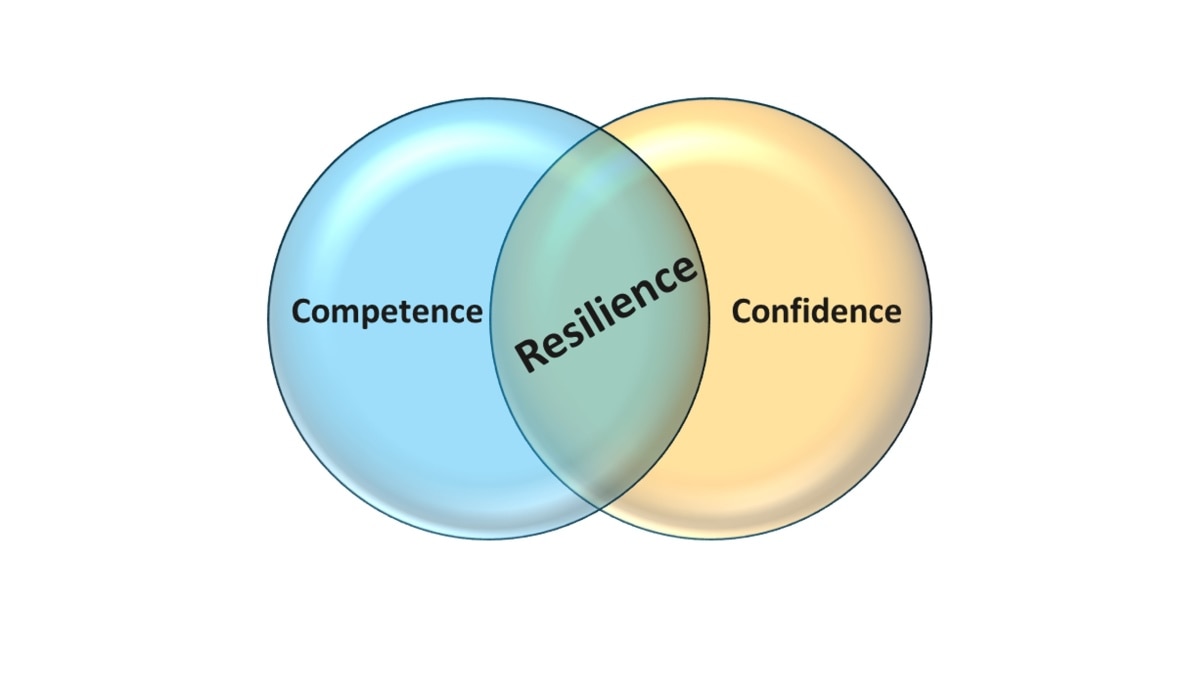
Definition
CBTA is a structured means of consistently assessing an individual's demonstrated performance, over time, towards established proficiency standards.
Goal
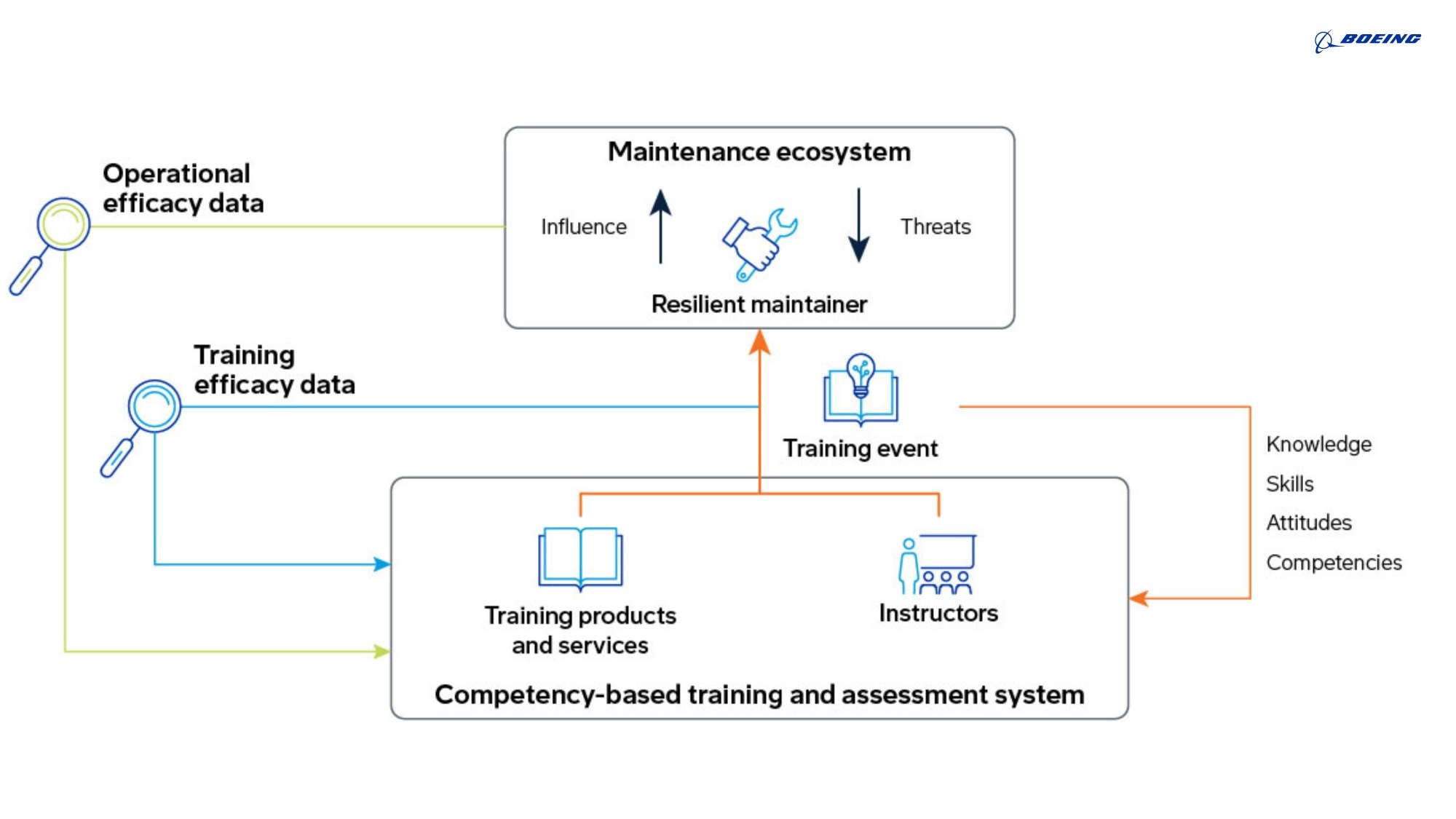
To develop resilient maintainers, who have the competence and confidence to identify, manage and negotiate threats within the maintenance ecosystem to prevent maintenance error.
CBTA enables training programs to be customized to the specific needs of aviation maintenance personnel. It follows a structured approach that continually assesses and builds individual resilience—defined as the ability to recognize, manage, and recover from threats while maintaining performance. This resilience is crucial in high-pressure environments and contributes significantly to the safety and reliability of maintenance operations.
A defining feature of CBTA is its focus on real-time decision-making and behavioral evaluation. Unlike traditional assessments that measure theoretical knowledge or technical skill in isolation, CBTA evaluates how technicians act and respond in practical scenarios. This allows for more targeted feedback and development opportunities that strengthen both individual capabilities and team performance.
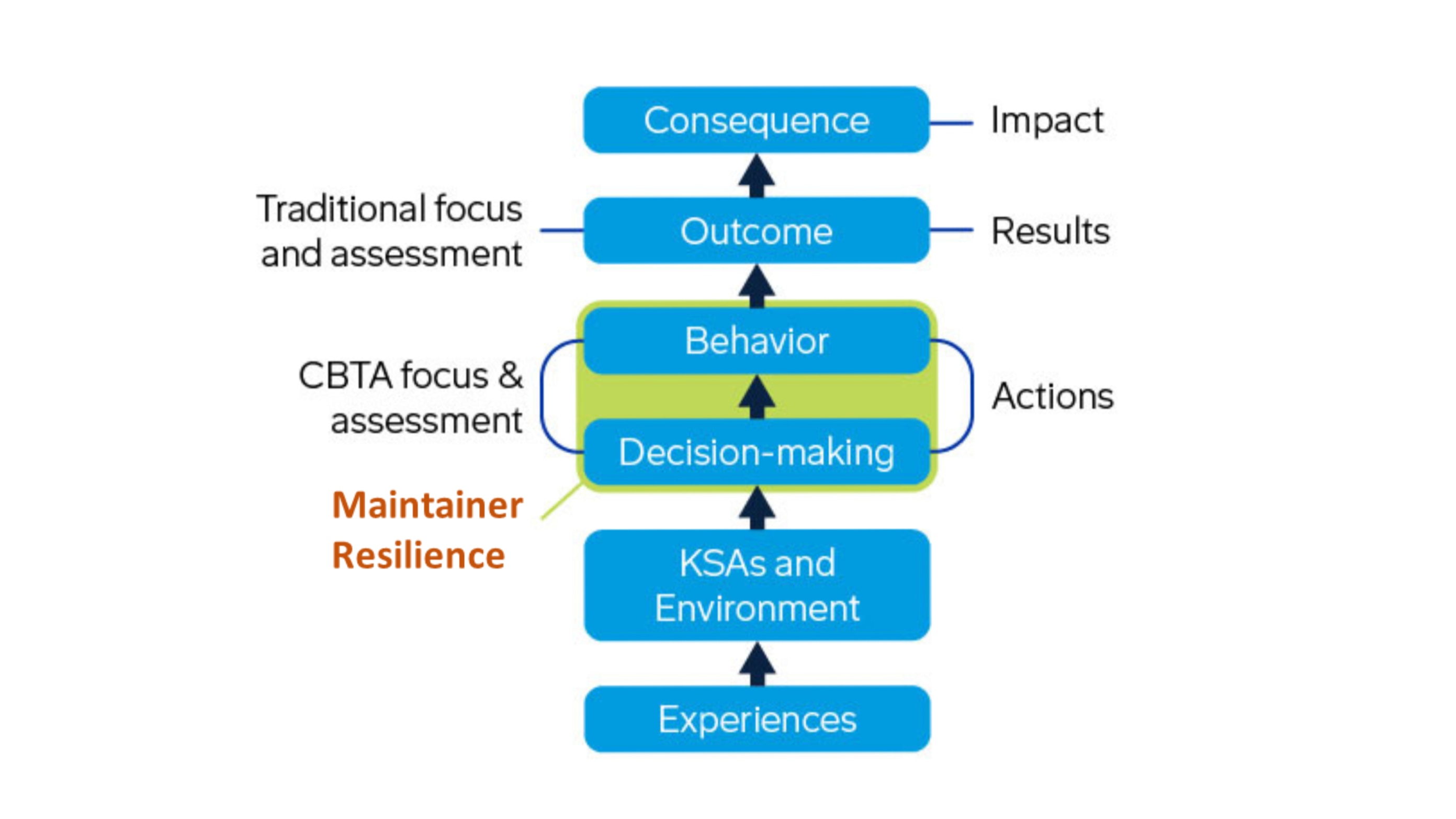
Traditional aviation maintenance training focuses on the development of systems knowledge and task-based skills. Learners are assessed on successful maintenance outcomes.
Versus
CBTA focuses on the development of Knowledge, Skills and Attitudes(KSA) within a competency framework to influence healthy decision-making processes and behaviors.
A successful CBTA implementation requires a holistic training system comprised of relevant courseware, expert instructors, and practical learning environments. Instructors are central to this model, providing real-world training scenarios that mirror the challenges maintainers will face in the field. Through ongoing assessment and immediate feedback, maintainers refine their skills and adapt to evolving operational demands.
CBTA also drives organizational improvement by fostering a culture of feedback and continuous development. Insights gathered from training assessments can be leveraged to improve course design, align training with real-world requirements, and maintain the relevance and effectiveness of the program over time.
The Building Resilience Handbook offers foundational guidance for implementing CBTA in aviation maintenance. It outlines core principles, practical strategies, and the importance of fostering behaviors such as effective communication and professionalism—key components in promoting a safety-first culture.
Complementary courses introduce the 11 core competencies that define effective performance in aviation maintenance. These competencies not only help maintainers understand their role more clearly but also set consistent expectations across teams and organizations, reinforcing accountability and excellence in every task.
Request your Building Resilience handbook on Maintenance Training and we will share it with you when published later this year.
Adopting CBTA marks a critical step forward for the aviation industry. By emphasizing behavioral insights and practical performance, CBTA prepares maintainers to operate confidently and competently in dynamic, high-stakes environments. This approach improves both individual and organizational outcomes—elevating safety, efficiency, and resilience across the board.
A robust CBTA framework, supported by resources like the Building Resilience Handbook, targeted competency courses, structured On-the-Job Training (OJT), continuous instructor development and more, lays the foundation for a sustainable, high-performing maintenance workforce.
As aviation systems grow in complexity, the need for smarter, performance-driven training becomes clear. CBTA offers a modern, effective pathway to ensure maintenance personnel are not only compliant but truly competent. By investing in this forward-looking approach, organizations position themselves for long-term success—delivering safer operations, higher efficiency, and a workforce ready to meet the demands of tomorrow’s aviation landscape.


