Sign In / Register

Interactive list componentlink componet- interactive

management, implementation of Electronic Work Instructions and optimal inclusion of additional data elements

management, implementation of Electronic Work Instructions and optimal inclusion of additional data elements

Interactive list componentlink componet- interactive

management, implementation of Electronic Work Instructions and optimal inclusion of additional data elements

management, implementation of Electronic Work Instructions and optimal inclusion of additional data elements

The role of the Head of Training is crucial in ensuring that pilot training meets the highest standards of safety and effectiveness. By implementing Competency-Based Training and Assessment (CBTA), airlines can enhance pilot training and mitigate safety risks by focusing on the competencies essential for safe and efficient flight operations. Effective training methodologies are vital for preparing pilots to manage risks and respond to challenges in real-world scenarios. This article explores the key competencies the Heads of Training needs to develop, and why these competencies are essential for success, as well as several key elements of successful CBTA implementation. 

The importance of developing key competencies

As aviation training evolves, the challenges faced by Heads of Training also change. To effectively navigate these challenges, they require new knowledge, insight, and competencies that will strengthen their leadership capabilities and enhance aviation safety.


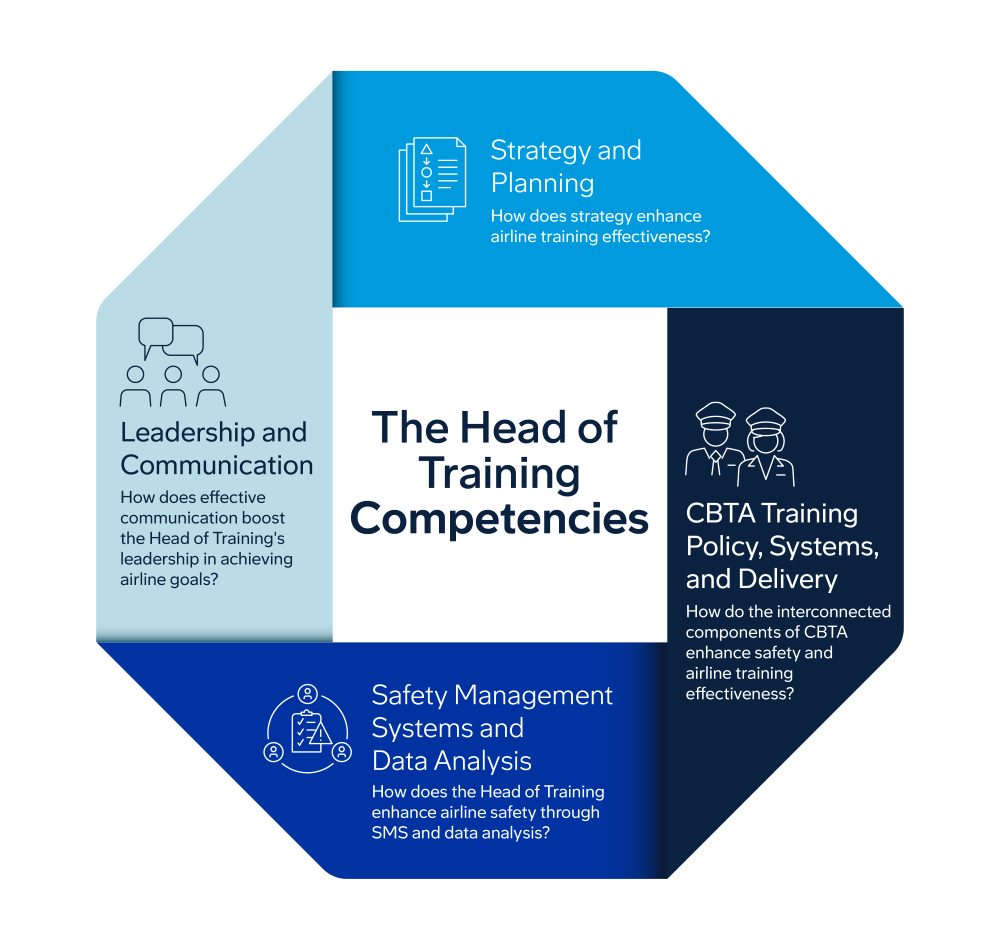
Competency-Framework-Graphic

1. Strategy and planning

Strategic training planning focuses on aligning training outcomes with the airline's overall safety objectives. Heads of Training must anticipate future training needs by utilizing data and analytics. This involves creating a training needs analysis program that enhances safety through a relevant and effective training curriculum. By developing this competency, Heads of Training can ensure that their programs are proactive rather than reactive, enabling them to adapt and modify training to meet the evolving needs of their pilots.

2. Leadership and communication

Effective leadership and communication are vital for fostering a culture of collaboration and trust within training teams. Heads of Training who prioritize these skills can inspire their teams to embrace change and work towards common goals. This competency is essential for creating an environment where feedback is encouraged, and team members feel valued. When Heads of Training communicate clearly and lead by example, they set the tone for a positive training culture that ultimately enhances safety, performance, and effectiveness.

3. Understanding CBTA training policy, systems and delivery

A comprehensive understanding of CBTA principles and goals is essential for Heads of Training to successfully implement an effective CBTA training program. This knowledge allows them to align training initiatives with regulatory frameworks and industry best practices. By focusing on this competency, Heads of Training can ensure that their programs are both competency-based and data-driven, resulting in improved outcomes for pilots and the organization as a whole. Additionally, a solid grasp of CBTA empowers Heads of Training to advocate for necessary changes within their organizations, fostering a culture of continuous improvement.

4. Safety Management Systems (SMS) and data analysis

Safety is the cornerstone of aviation, and Heads of Training are essential in managing and reducing safety risks. By enhancing their skills in Safety Management Systems (SMS) and data analysis, Heads of Training can proactively foster a strong safety culture within their organizations. This includes analyzing safety data and trends to guide training decisions and improve operational safety. When Heads of Training focus on safety risk management, they significantly contribute to the overall safety of their airline.

Keys to successful CBTA implementation

Implementing a CBTA program requires a continual learning approach that involves several key elements:

  • Engagement and networking: Fostering engagement among airline leadership and Heads of Training allows for the exchange of ideas and best practices. Networking opportunities can lead to collaborative solutions for common challenges faced in training management.
  • Continuous professional development: Heads of Training should seek opportunities for ongoing learning and development to stay current with industry trends and best practices in training management.
  • Feedback mechanisms: Establishing channels for feedback regarding training programs and safety culture is essential. Heads of Training should encourage open communication to identify areas for improvement and ensure that training remains effective.

Conclusion

The implementation of a CBTA program represents a significant advancement in pilot training, emphasizing the importance of competencies to enhance flight safety. By understanding their critical role in this process and focusing on developing key competencies, Heads of Training can lead their organizations in fostering a culture of safety, enhancing training effectiveness, and ultimately ensuring the highest standards of operational excellence.

As the aviation industry continues to evolve, the role of the Head of Training will remain vital in shaping the future of pilot training and ensuring that safety remains the top priority. By investing in their own development and the development of their teams, Heads of Training can navigate the complexities of modern aviation training with confidence and success.

To support Heads of Training in addressing these critical needs, Boeing offers the CBTA Head of Training Leadership Program. This program is designed to support these individuals with the necessary skills and knowledge to implement a CBTA program effectively, ensuring that training initiatives align with industry best practices and regulatory requirements. Interested parties are encouraged to enroll now on MyBoeingTraining to take the next step in enhancing their training programs and fostering a safer aviation environment.