
Global Services
Global Services
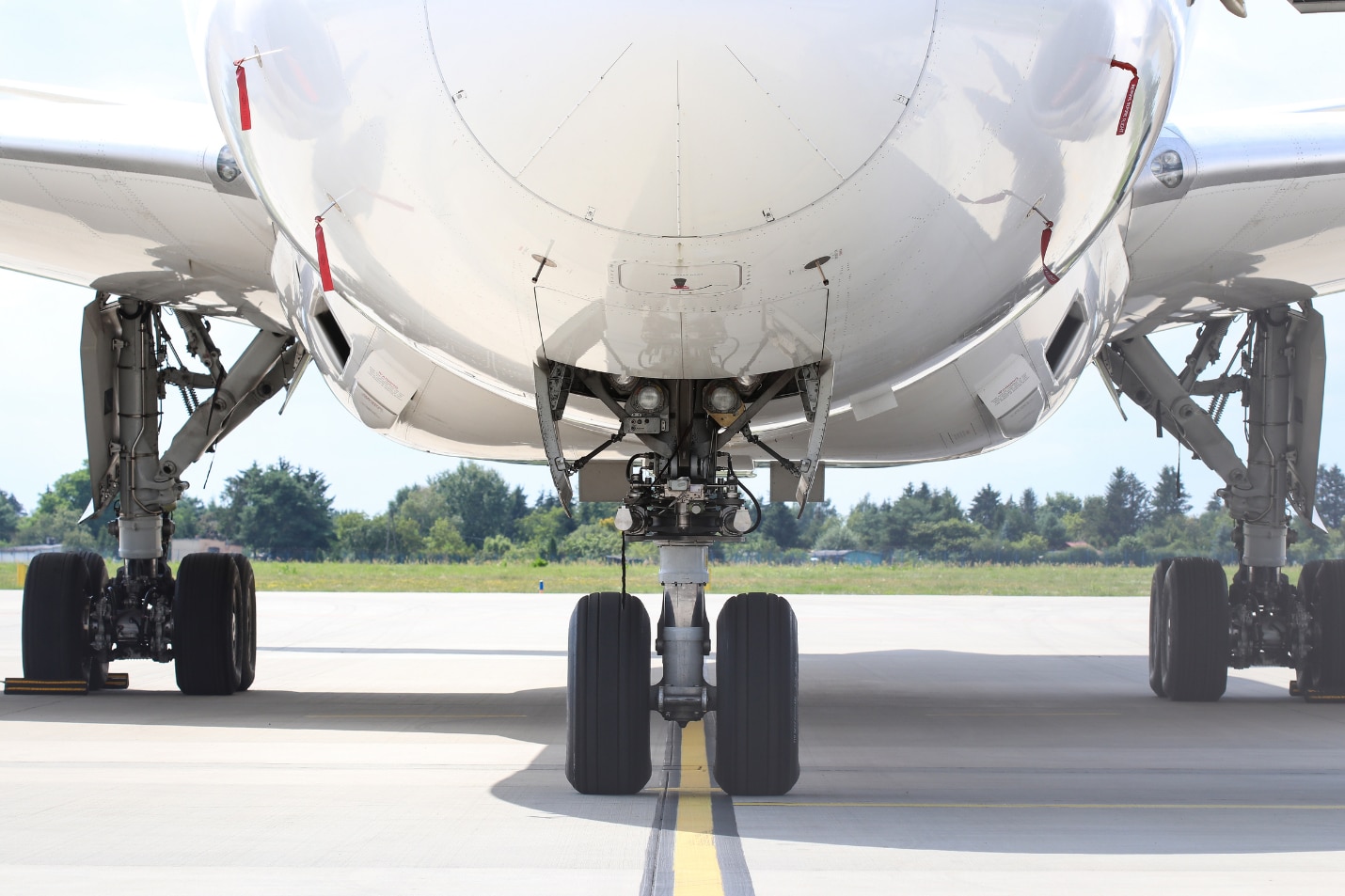
With summer just a few short months away in the northern hemisphere, the aviation industry is about to experience peak traveler demand and flight hours.
Wheel and brake assemblies are repaired, overhauled, and replaced based on how often they are used; therefore, it is realistic to expect a sizeable increase in wheel and brake MRO requests in the coming months. Anticipate the increase in demand by familiarizing yourself with the wheel and brake MRO process and ensuring your inventory is well-stocked.
Before you start, ensure that you use proper Personal Protection Equipment (PPE) and recommended safety equipment for each job.
Tires take a predetermined number of landings before it's time to change them. Check the tire's tread depth, the primary indicator, while paying special attention to above-average wear, such as chevron cutting, cracking, or unusual bulges.
Wheel assemblies typically go through four tire changes before it's time to overhaul (dependent on OEM requirements). Wheels are inspected during tire changes for premature damage from corrosion or foreign objects, and a more in-depth inspection occurs during overhaul.
Measure the brake pads' or discs' remaining life for brake assemblies. For assemblies with a carbon or steel heat sink, it's time for an overhaul once the wear pin is no longer visible outside the reference plate. Also, look for hydraulic fluid leaks that must be mitigated immediately to ensure full stopping power is available.
With areas of concern identified, it's time to lift the aircraft and remove the wheel or brake assembly. In addition to leading OEM aftermarket wheels, brake parts, and tires, Boeing Distribution provides ground support equipment to ensure the safe and proper raising and lowering of landing gear.
To safely jack up an aircraft, it is crucial to ensure it is stable and balanced. Use the appropriate jack and jack pad, and adhere to all safety procedures. Position the jack under the designated lift points, ensure even weight distribution and lower the jack only once the load is fully supported.
Start by depressurizing the wheel and tire assembly before removing it from the aircraft. After removing the wheel, ensure the assembly is depressurized and the valve core removed to avoid injury or possibly death. Break the tire beads to facilitate the removal of tie bolts and nuts or lock ring, push off the old tire, or disassemble the wheel halve to remove the tire.
Clean the wheel assembly and parts to prepare for required inspections. If no fault is found during inspection, prep for reassembly with a new tire.
Install the new tire (and tube if necessary) and reassemble the wheel with new packings. Torque tie bolt nuts or install the lock ring per the assembly section in the CMM. Use an inflation cage and regulated nitrogen source to inflate the tire slowly with nitrogen. Ensure proper tire pressure and begin air retention and tire stretch. If the tire pressure drop is within the limits of the CMM testing section, reinstall the wheel to the axle with a thin, fresh layer of grease. Boeing Distribution supplies leading tire lines such as Goodyear, Michelin, and Desser's Aero Classic.
Wheel assemblies start with a preliminary inspection to look for apparent damage, FOD, or missing parts that require extra caution during disassembly.
Remove the bearings and seals, break the beads, remove the tire, and disassemble the entire wheel. Paint must be stripped using methods like plastic media blasting or other manufacturer-approved methods.
Non-destructive inspection uses methods such as liquid penetrant, eddy current, and magnetic particle inspection of ferrous parts. Perform a detailed inspection of small parts and sub-components (like bearings and seals) and test thermal relief and over-inflation plugs. Examine the heat shields, drive keys, and other wheel components. Perform any corrosion control or repairs as required by the inspection findings in accordance with limits set forth in the CMM.
Reapply the coatings and preassemble the wheel (using proper anti-size lubricants on the bolts) for tire mounting. Mount the tire, install freshly greased bearings, and balance the wheel and tire assembly if required. Inflate the tire per the AMM or CMM and perform tire stretch and air retention tests in accordance with the CMM.
Begin by taking a pressurized wear pin measurement to determine any remaining life on the heat stack. Remove the housing from the heat stack and torque tube and route for disassembly. Carbon heat stacks can be disassembled or sent to manufacturers for refurbishment.
In the case of steel brakes, remove the rotors for evaluation. Deline the stationary discs and clean the base plates. Consult the CMM for torque plate cleaning. Disassemble the housing, segregate the components for cleaning, and strip the housing paint. In the event of an overheated brake, additional special inspections need to be completed.
During inspection, check the rotor mass weight and thickness for reusability or discard if below limits. Test and measure all piece parts for serviceability. Perform liquid penetrant, eddy current, and magnetic particle inspection (looking for cracks in steel parts). Inspect pistons and sleeves for damage or corrosion. Measure stationary discs, the pressure plate, and torque tube for minimum thickness. Measure return springs and adjuster parts for reusability as stated in the CMM.
Assembly starts with reapplying coatings to the housing and high-temp paint when required by the CMM. Reassemble the housing using all new elastomeric seals and other required replacement items.
Install the refurbished carbon stack or overhauled steel heat sink components. Assemble the housing to the heat stack and torque all fasteners to the CMM. Install lock clips to tie bolts. Pressure test the brake with hydraulic fluids according to instructions in the CMM. Cycle the brake several times. Then perform a maximum high-pressure test while searching for leaks and drips. Release and measure the running clearance and record per the CMM. Install and safety all bleeders and plugs.
Perform the final inspection and issue maintenance release documents. For wheel and brake aftermarket parts, Cleveland Wheel and Brake Systems is renowned for Business and General Aviation aircraft and Collins Aerospace (formerly Goodrich) and Parker Meggitt are suited for larger business jets, regional, and commercial airliners.
Once the assemblies are overhauled or tire change is complete, place them in parts storage for when they are needed again or reinstall them according to manufacturer specifications, test them to ensure they are correctly installed, and record the event in the airplane maintenance manual. Now, the airplanes wheels, brakes, and tires are refreshed and ready to continue supporting the aircraft through one of the most exciting and critical safety events: takeoff and landing.
If you need the assistance of a reliable and adaptable MRO provider known for a strong commitment to quality, look no further than Boeing Distribution's in-house Wheel & Brake Repair services. We offer wheel and brake repairs, overhauls, and tire changes, utilizing 100% genuine OEM parts (Cleveland, Collins, Parker Meggitt, Honeywell, and Safran) from six locations across the United States. Our services are backed by more than 35 years of experience in the aerospace market, supporting a wide range of market segments from business jets and regional aircraft to commercial airliners.


