Interactive list componentlink componet- interactive

management, implementation of Electronic Work Instructions and optimal inclusion of additional data elements

management, implementation of Electronic Work Instructions and optimal inclusion of additional data elements

Interactive list componentlink componet- interactive

management, implementation of Electronic Work Instructions and optimal inclusion of additional data elements

management, implementation of Electronic Work Instructions and optimal inclusion of additional data elements

What it does

RouteSync automatically transfers flight route data from airline planning systems to the aircraft flight management computer using ACARS. Pilots can request and load the route directly from the aircraft without manually entering waypoints or route strings.

RouteSync receives flight plans, prepares the data for aircraft use, and delivers it to the Flight Management Computer (FMC) at the pilot’s request. It automates preflight FMC data entry by loading the flight information pilots would otherwise enter manually, including route and weather data, and validates the data before uplink to ensure accuracy and reliability.

By removing manual entry and synchronizing plans with the aircraft, RouteSync helps reduce delays, minimize errors, and improve departure predictability.

What it delivers


Reduce aircraft turnaround time

Automated route delivery removes manual FMC entry and verification steps during predeparture preparation.

Minimize route entry errors

System-to-system route delivery reduces transcription errors caused by manual FMC data entry.

Reduce departure delays

Deliver updated routes to the aircraft, even close to departure, without manual entry or rework.

Improve route accuracy

Pilots load the exact route dispatch planned without reentering waypoints or route strings.

Reduce crew workload

Automation removes repetitive route entry and verification tasks from cockpit and dispatch workflows.

Enable predictable departures

Consistent route delivery reduces variability in departure preparation across the fleet.


Real results from our customers

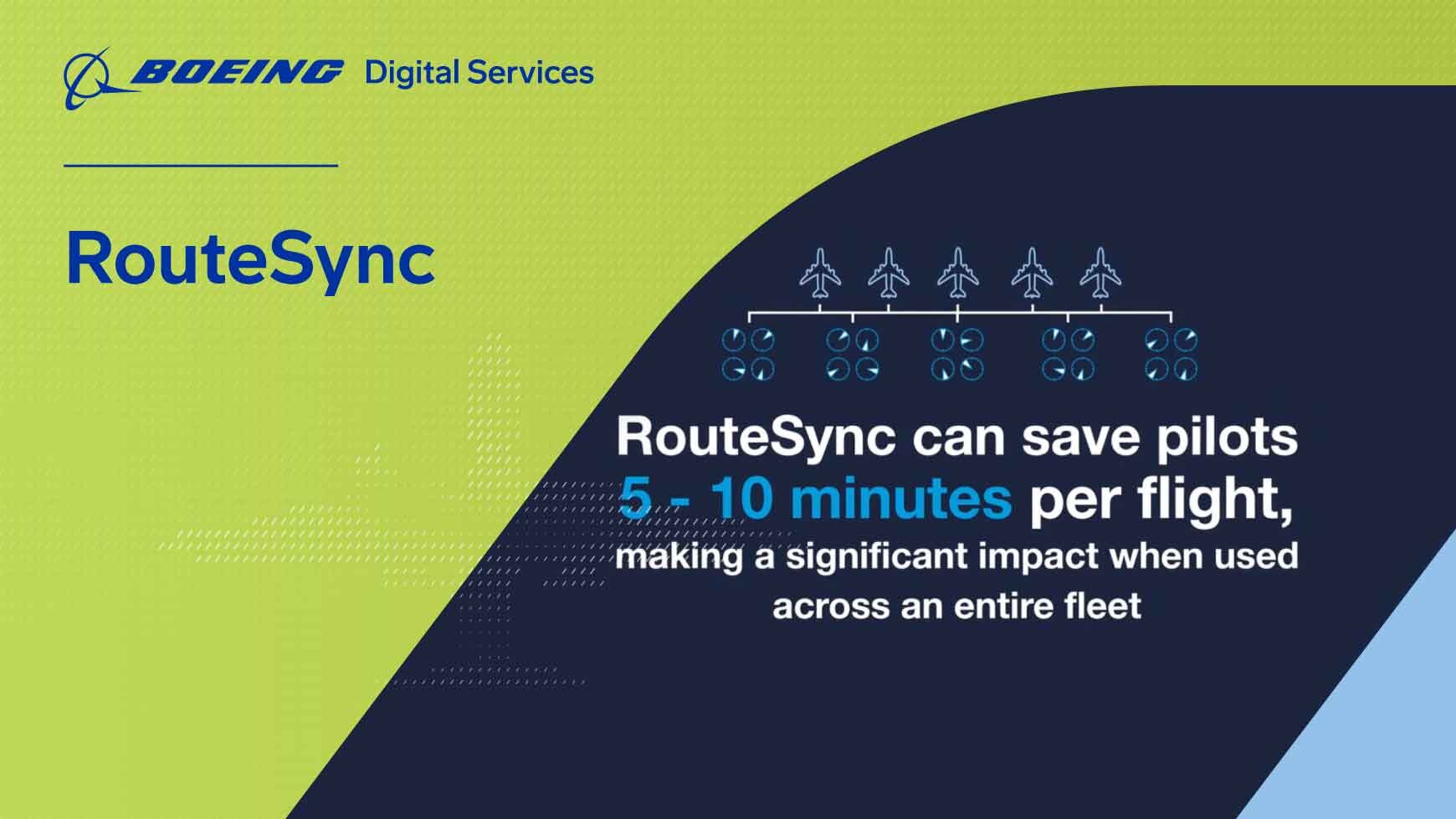
5-to-10-minute turn reduction

Automated route delivery can reduce aircraft turn time by eliminating manual route entry and verification.

99% route delivery reliability

RouteSync reliably delivers complete FMC message sets, including route and performance data.

Lower network delay cost

Reducing small delays across many departures helps limit network-wide operational disruptions.


What sets it apart

  • undefined

    Pilot-initiated route delivery

    RouteSync delivers route data to the FMC only when pilots request it, ensuring crews always receive the most current route.

  • undefined

    Reliable late route delivery

    RouteSync reliably delivers full FMC message sets, even when routes change close to departure and operational volumes are high.

  • undefined

    Mixed-fleet standardization

    RouteSync provides a single route delivery workflow across Boeing, Airbus, and Embraer aircraft types, eliminating fleet-specific processes and reducing reliance on company routes.

  • undefined

    Complete FMC route delivery

    RouteSync delivers full runway-to-runway FMC message sets without truncation or partial data.

  • undefined

    Automatic ACARS data capture

    RouteSync records ACARS AOC messages during route delivery, creating a complete record of what was sent and received.

  • undefined

    Built with direct FMC access

    As the aircraft manufacturer, Boeing enables reliable system-to-aircraft route delivery through direct access to FMC message sets.


System integrations

  • undefined

    Aircraft flight management and data link systems

    RouteSync interfaces directly with aircraft flight management computers and ACARS data link infrastructure to deliver route data from planning systems to the aircraft.

  • undefined

    Dispatch systems

    RouteSync receives flight data from airline dispatch systems and prepares it for reliable delivery to the aircraft.


Why airlines choose RouteSync

Airlines choose RouteSync to reduce avoidable delays, lower operational risk, and protect schedule performance at scale.

Reduce the cost of network delays

Removes manual FMC route entry and delivers routes to the aircraft on time.

Protect on-time performance

Standardizes route delivery to reduce variability during predeparture.

Remove failure points in high-pressure moments

Replaces manual workflows with a system-driven route delivery process.

Scale operations without scaling complexity

Provides a single route delivery workflow across aircraft types.

Reduce hidden costs of manual processes

Eliminates rework, entry errors, and ACARS messaging costs through automation.

Ensure accurate flight execution

Loads the exact route dispatch planned directly into the FMC.


Need help improving airline operations?

Explore Boeing Aviation Business Solutions consulting services.

Strategic advisory services to help airlines improve operational performance and reduce costs.
Explore Consulting Services

Frequently asked questions

What is flight plan uplink or automated route delivery in aviation?

add

Automated route delivery, sometimes called flight plan uplink, sends flight plan route data from airline planning systems to the aircraft flight management computer, eliminating manual entry.

How does RouteSync deliver routes to aircraft?

add

RouteSync uses ACARS data link communication to transfer route data from planning systems to the aircraft where pilots can request and load it into the FMC.

Does RouteSync work with airline planning systems?

add

Yes, RouteSync integrates with airline flight planning systems while automating route delivery to the aircraft.

What aircraft and flight plan formats does RouteSync support?

add

RouteSync works with any aircraft equipped for ACARS messaging, including those supporting AOC data link services. Flight plans must be made available electronically through standard interfaces such as email, message queues, FTP, or HTTP. RouteSync supports multiple data formats, including XML, PDF, and ASCII-based files that can be parsed for route and flight information.