Insights

Global Services
Global Services

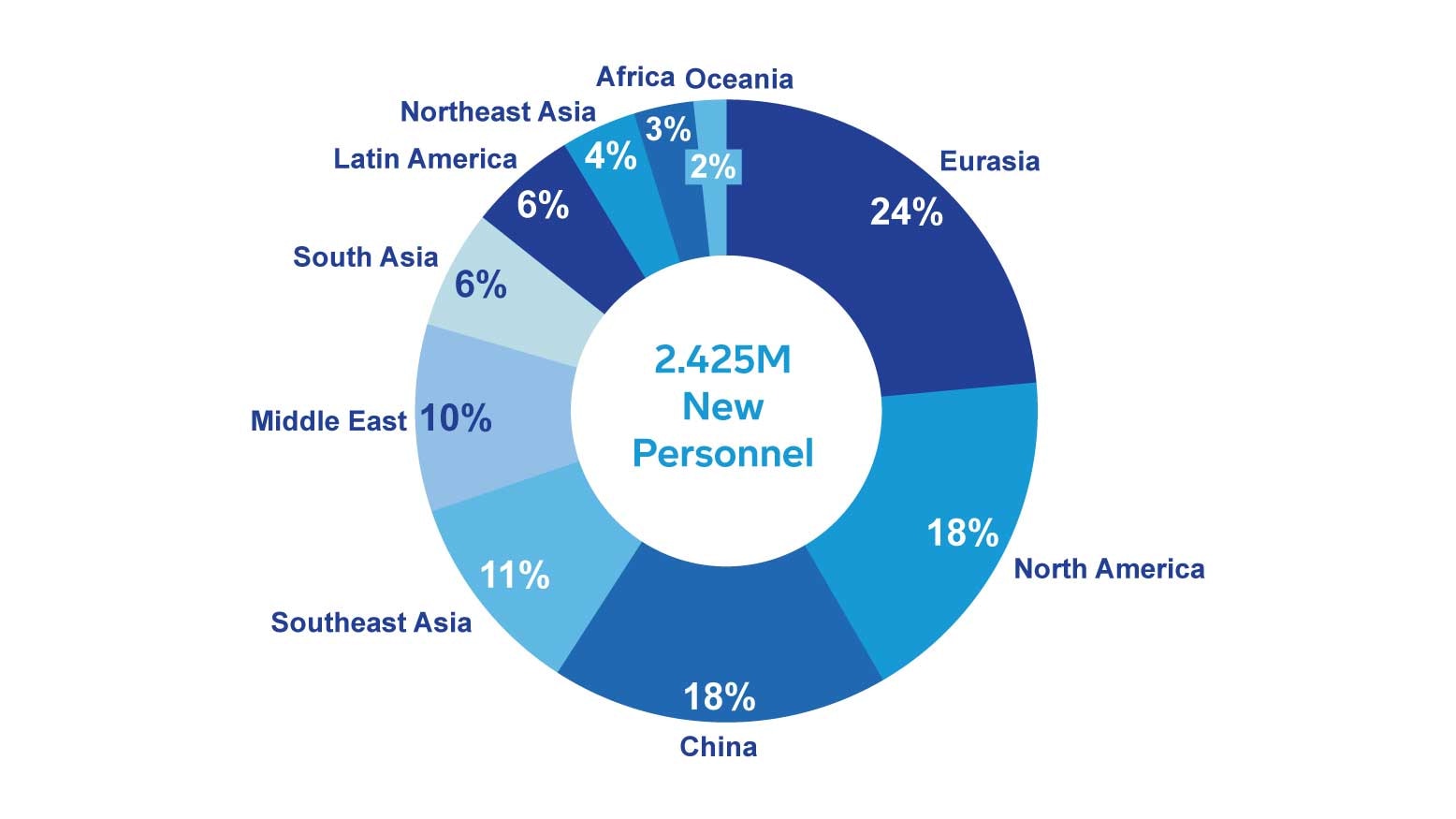
Projected new aviation personnel needed by region, 2026-2045
It takes skilled workers to keep airplanes flying — and we’re going to need millions more of them soon.
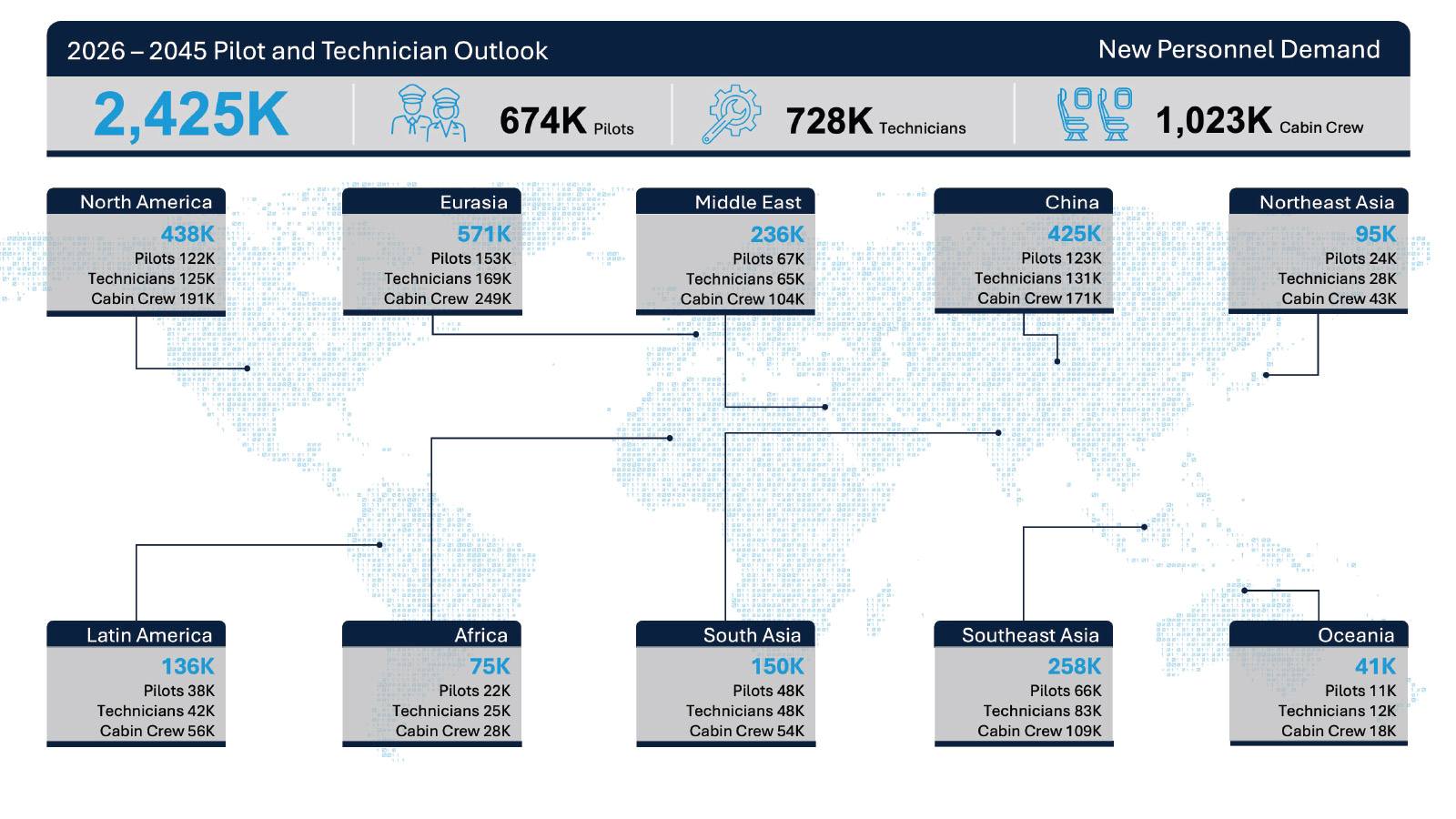
According to the latest Boeing Pilot and Technician Outlook (PTO), the global commercial aviation industry will require 2.4 million new aviation professionals between 2026 and 2045. Around 60% of this demand will come from Eurasia, China, and North America.
Here’s the breakdown by role:
Major driving forces behind this aviation personnel shift include fleet growth, workforce retirement, and ongoing turnover.
But meeting this demand will require more than just hiring at scale.
To address aviation workforce challenges and ensure long-term growth, airlines, MROs, and training providers are beginning to invest in talent development, competency-based programs, and digital training tools.
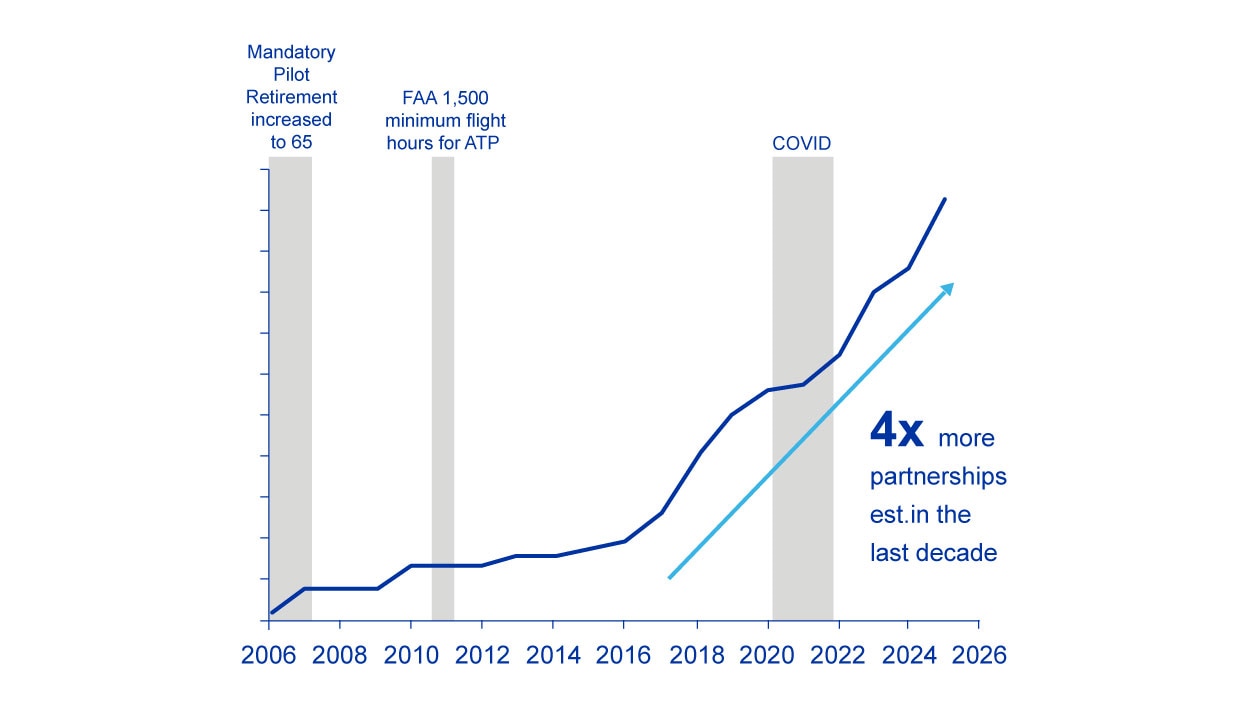
Trend in partnerships with airlines and MROs, 2006-2026
The aviation services industry is pivoting from reactive hiring to proactive recruitment and complete management of the talent pipeline.
For pilots, airlines are investing in educational opportunities and joint offerings, such as cadet programs, school partnerships, and scholarships, to reduce barriers to entry and accelerate time to line.
Similarly, MROs are forging relationships with community colleges and technical schools to close the gap between classroom training and on-aircraft readiness.
By working closely with partners, airlines and MROs can ensure training aligns with their specific operational needs.

Managing recruitment, financing, training, and qualification pathways for new aviation professionals can reduce time to readiness and guarantee the development of relevant, high-value skills.
Airlines and service providers that align recruitment, training, qualification, and retention will be better positioned to manage labor risk and support future growth.
— 2026 Boeing Pilot and Technician Outlook
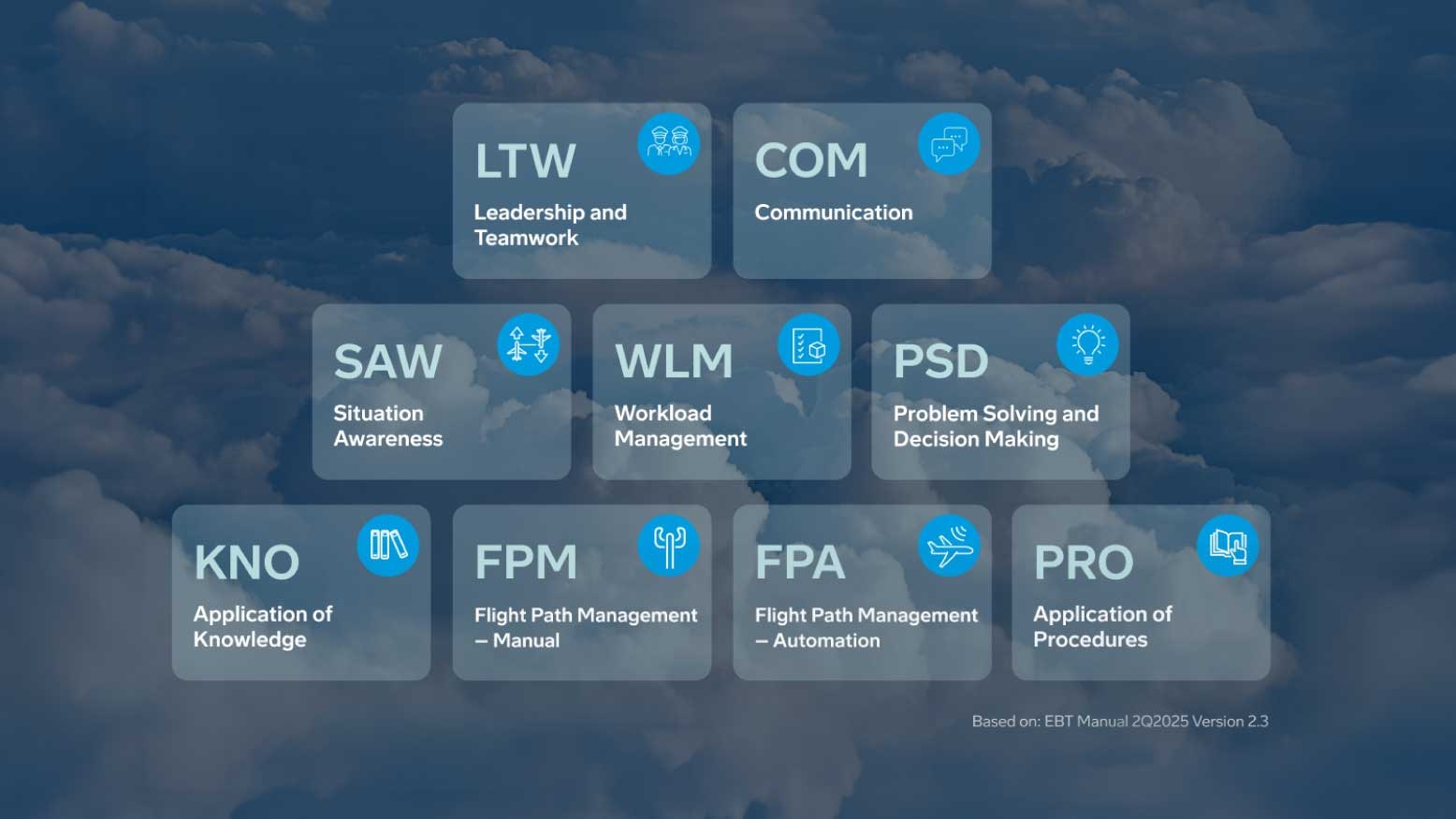
CBTA Pilot Competency Framework
Rapidly becoming the new methodology of flight training, Competency-Based Training and Assessment (CBTA) aims to strengthen pilots’ resilience, competence, and decision-making skills using targeted training exercises under realistic operating conditions.
The shift to CBTA in pilot training focuses on developing and evaluating the skills, knowledge, and behaviors essential for pilots to operate safely and efficiently in a commercial air transport environment. Boeing’s implementation of CBTA leverages advanced digital tools and fleet operations data to tailor training to individuals and prepare pilots to respond effectively to in-flight challenges.
CBTA offers several benefits, including:
With flight operations growing more complex, airlines are increasingly adopting competency frameworks and scenario-based training to ensure pilot readiness.
By emphasizing demonstrated competence and earlier exposure to operational scenarios, CBTA can prepare pilots more quickly and raise throughput.

Digitalization and data are redefining aviation services, including how people are trained.
Many airlines are incorporating digital tools into their training programs, such as virtual and augmented reality, adaptive simulators, and automated feedback.
Solutions and services that integrate AI offer many benefits for flight and maintenance training, including:
Nevertheless, the increased use of AI and digital tools has raised concerns about privacy, accountability, and overreliance on automation. AI will emerge as an important enabler of next-generation training by supporting a more scalable, efficient, and data-driven learning system across pilot, cabin crew, and maintenance training.
Digital tools and AI-driven analytics can scale aviation training, but airlines and training providers will need to carefully monitor risk and validation requirements as their digital capabilities advance.
Aviation is a safety-critical industry, and broader use of AI will depend on regulatory alignment, governance, data quality, instructor readiness, and system transparency.
— 2026 Boeing Pilot and Technician Outlook
Boeing’s PTO defines a dual challenge in commercial aviation services: Meet near-term workforce needs while scaling recruitment, CBTA adoption, and digital integration to support long-term growth.
With more than 2.4 million new aviation personnel needed by 2045, airlines, MROs, and training providers must meet this demand so they don’t fall behind.
In addition to hiring more aviation professionals, organizations are starting to:
Coordinated investment across recruitment, curriculum, and technology is essential for building a resilient, scalable aviation workforce that can last well beyond the next 20 years.