Global Services
Global Services

Aviation services are undergoing a shift like never before, with moves toward digitalization, lifecycle optimization, and competency-based training. As the industry evolves, more operators are seeking airline consulting for support and guidance.
According to Boeing’s 2026 Services Market Outlook, the global commercial aviation services market is projected to reach a total value of $4.9 trillion over the next 20 years.
For aviation leaders, the question is simple: How can operators translate market trends into practical, data-driven decisions?
One solution is to partner with an airline consulting team. Aviation experts can provide tailored, strategic advisory services designed to improve cost management, ensure reliability, enhance operational efficiency, and assist with compliance.
By investing in airline consulting services, operators can confidently navigate industry changes across key areas such as maintenance planning, data analytics, and business operations.
The aviation services market is evolving fast. Here are five ways consulting experts can equip operators with the tools and processes they’ll need to succeed.
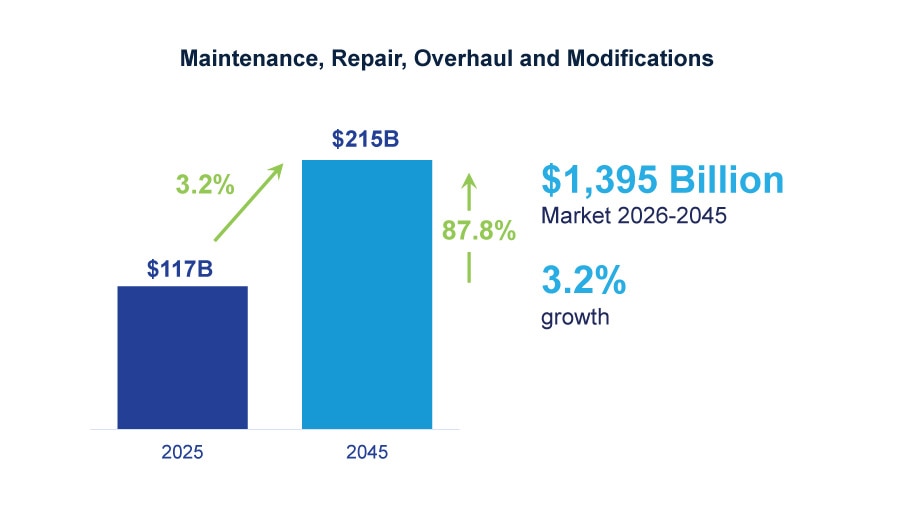
Projected growth and market value of MRO and modifications, 2026-2045
As aircraft stay in service longer, maintenance planning will play an increasingly important role in fleet operations and performance.
According to the report, the market for maintenance, repair, overhaul (MRO), and modification services is projected to grow 3.2% annually between 2026 and 2045, reaching a cumulative value of $1.4 trillion.
Whether working with a new or mature fleet, operators must find ways to balance scheduled maintenance work, costs, and regulatory requirements while minimizing aircraft time on ground.
How aviation consulting experts can help
Airline consulting experts can review maintenance processes, including planning, engineering, supply chain, and maintenance execution, to identify challenges and provide detailed, actionable solutions for improving performance, minimizing costs, and increasing aircraft availability.
Boeing’s Maintenance and Engineering Consulting works with clients to minimize costs and improve productivity. For example, Boeing helped a world-class African operator enhance its operational efficiency and position itself as a leading player in 737NG asset availability.
Boeing also offers Optimized Maintenance Engineering Services, which analyze a fleet’s usage and technical data to propose solutions that increase fleet availability and extend maintenance intervals.
Boeing’s Services Market Outlook identifies workforce shortages as a major industry challenge in the coming years. Knowledge gaps and reduced bandwidth can place pressure on organizations and existing operational processes.
As aircraft lifespans lengthen, hiring qualified aviation professionals will become essential to maintaining reliable operations.
Operational efficiency depends on more than just reducing costs. Clear processes, coordinated teams, and effective disruption response can help operators protect schedule performance, improve aircraft utilization, and provide a better customer experience.
How aviation consulting experts can help
Aviation consultants evaluate operational processes, identify bottlenecks, and recommend practical improvements tailored to an operator’s objectives.
Boeing’s Aviation Operations Consulting helps airlines enhance efficiency and manage costs by providing support in areas such as:
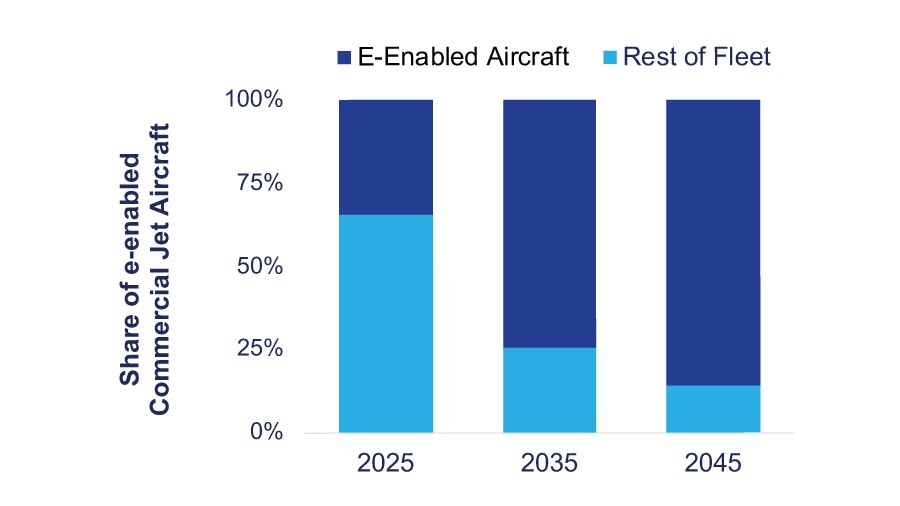
Current and projected share of global e-enabled commercial aircraft, 2025-2045
By 2045, nearly 90% of the global fleet will be e-enabled, according to Boeing projections.
As aircraft generate more data, airlines are increasingly relying on analytics to support predictive maintenance, reliability planning, and faster responses to disruptions.
Data alone, however, doesn’t always suffice. Operators must establish connected processes and clear workflows to help teams interpret the information and act on it. The right expertise and digital tooling can bridge that gap.
How aviation consulting experts can help
Aviation consultants can help operators convert raw data into actionable outcomes through structured frameworks, integration expertise, and hands-on guidance provided directly to maintenance and engineering teams.
Boeing’s Aviation Engineering Services offer a tiered maintenance data integration framework that progresses from basic MPD and PDF task cards to full XML data loads with Boeing-managed revision services, reducing manual effort at every level.
Through real-time fleet health monitoring and prognostics, operators can anticipate issues before they cause disruptions.
More connected aircraft and systems bring new opportunities but also increased cybersecurity responsibilities.
A cyber event can affect maintenance systems, flight operations, compliance, and service continuity, making it essential to adopt a proactive, resilience-focused strategy that integrates robust governance, continuous monitoring, and rapid incident response across the aircraft lifecycle.
How aviation consulting experts can help
Airline experts help operators assess and prioritize cyber risks across aircraft, ground systems, and supply chains by developing tailored governance, architecture, and mitigation plans to meet operational and regulatory requirements.
Boeing’s Cybersecurity and Digital Transformation team, which specializes in digital and cybersecurity consulting, enhanced the cybersecurity program for a large international airline.
SkyGuard, Boeing’s cybersecurity consulting service, is specifically designed to help airlines increase operational resilience, support regulatory readiness, and plan coordinated response and recovery.
To maintain sustained growth, airlines should look to address core trends identified in Boeing’s report, including an evolving aviation services market, capacity constraints, aging fleets, and the expanding adoption of digital tools and AI.
How aviation consulting experts can help
Aviation consultants help airlines convert growth priorities into measurable action by developing tailored resilience roadmaps aligned with the customer’s safety, operational, and regulatory goals. They then drive program execution by aligning stakeholders, working with vendors, optimizing resources, and applying proven project and change management frameworks.
Boeing’s Results Management team partners with customers to deliver tailored, high-impact solutions for complex aviation projects, including:
Boeing forecasts significant changes to the aviation services market, from supply chain challenges to longer aircraft lifecycles, leaving many operators unsure what steps to take next.
Airline consulting experts help clarify the path forward and develop strategy in close collaboration with operators, leveraging both individual expertise and organizational experience to improve outcomes and serve as a force multiplier for the business.
For airlines facing a $4.9 trillion services opportunity, partnering with experienced consultants can be a highly effective way to turn potential into lasting results.